



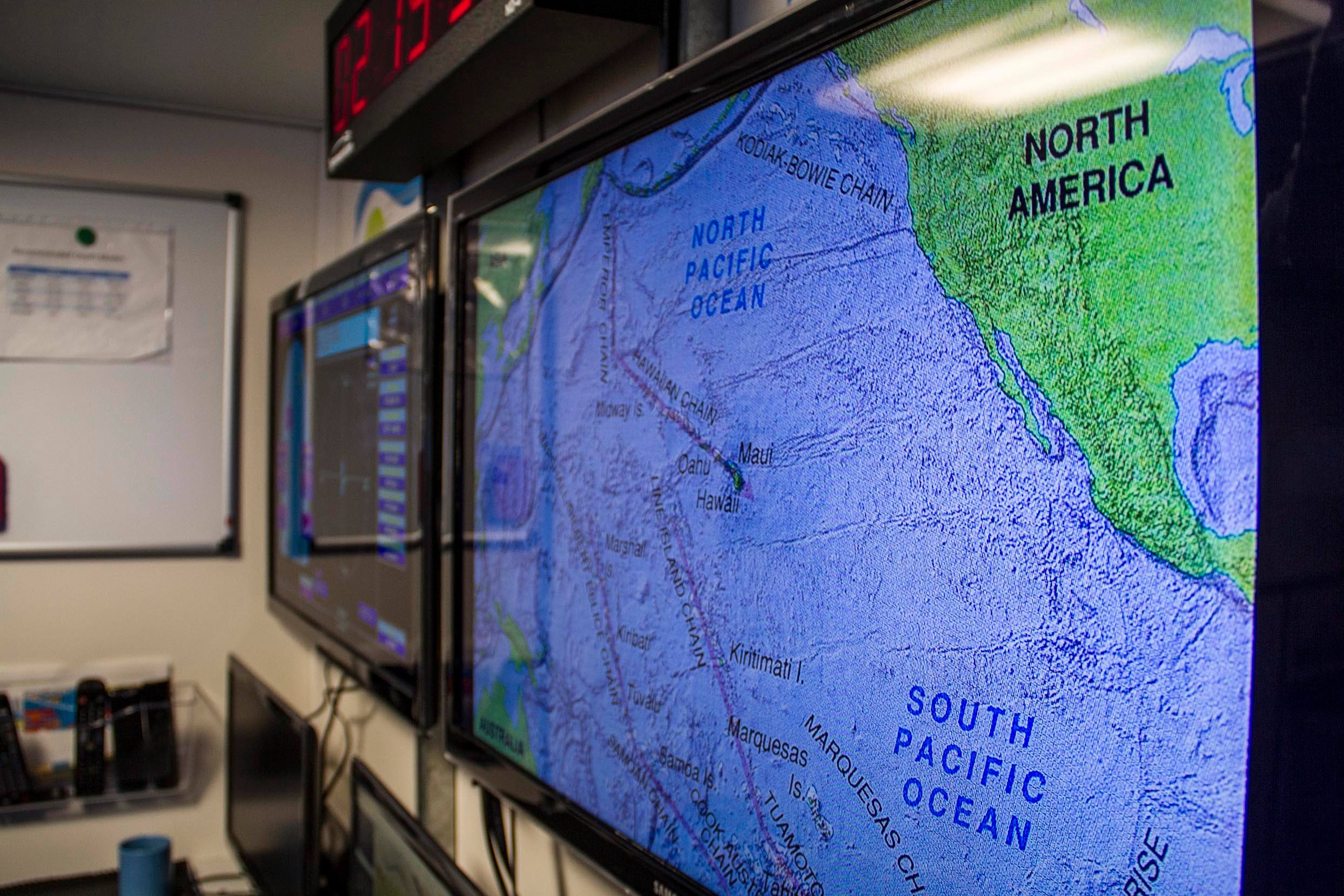

The word "Seamount" may conjure an image of a dark, quiet, cold and lifeless mountain deep underwater. This is not the case, as researchers discovered while exploring the seamounts around the Northwestern Hawaiian Islands back in 2003. “It was a total surprise,” reveals Dr. John Smith, chief scientist of Falkor’s current expedition. "We had an idea about the organisms that we might find down there, but we definitely did not expect such density.”
Diving a manned-submersible to a depth of 2000 meters revealed a seascape teeming with dense deep-sea corals and sponges. Far from a sterile environment that one might expect, they discovered an alive and vibrant ecosystem. “The corals we found seem to like areas with currents to feed from, so we are going to the recently expanded area [Johnston Atoll Unit] of the [Pacific Remote Islands] Marine National Monument to try to identify formations such as reefs, scarps, faults or volcanic cones," said Dr. Smith. "We want to get a better idea of what the geological structures look like.”
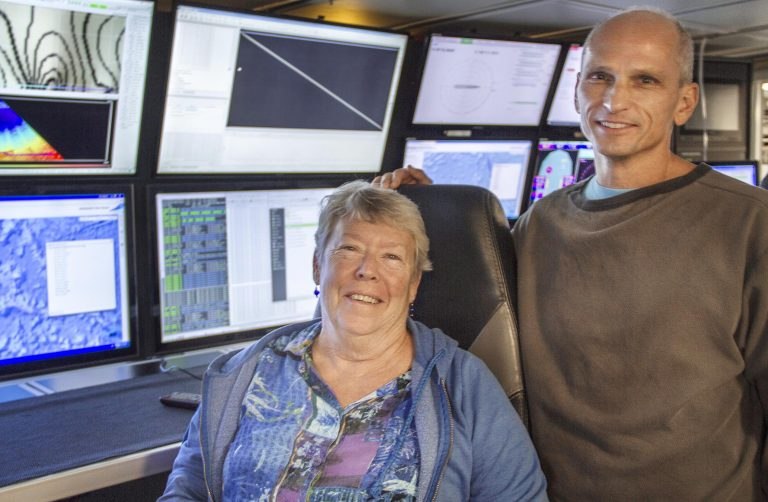
Drs. Joyce Miller and John Smith have been mapping the Pacific for 40 years. Taking advantage of the opportunity to obtain high resolution bathymetry during Falkor's transit from Guam to Hawaii, they will map the recently expanded protected area of the Johnston Atoll Unit of the Marine National Monument.[/caption]
We Have to Know
“When it comes to biology, we really have no idea what is down there,” explains Dr. Joyce Miller
After searching for life in