
Nearly two weeks into the expedition, our cruise has achieved a number of impressive successes already: chasing the eddyExternal Water, Internal Filter
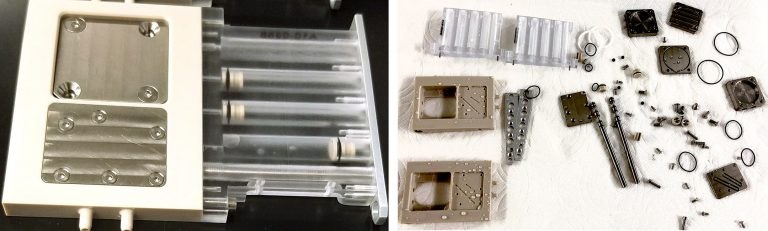
Inside the LRAUV, the ESP carousel holds 60 cartridges. When triggered for sampling, the cartridge allows external water to flow across an internal filter that collects microbial cells (0.2um). The flow-through water (a.k.a. filtrate) is released back into the environment, and a preservative is added to the filter to fix the microbes for further processing back on land. Since this sounds like a relatively simple procedure, we opened up one of the sampling cartridges to show you just how many specialized components are involved, including tiny screws and baby o-rings.
Sampling With a New Level of Precision
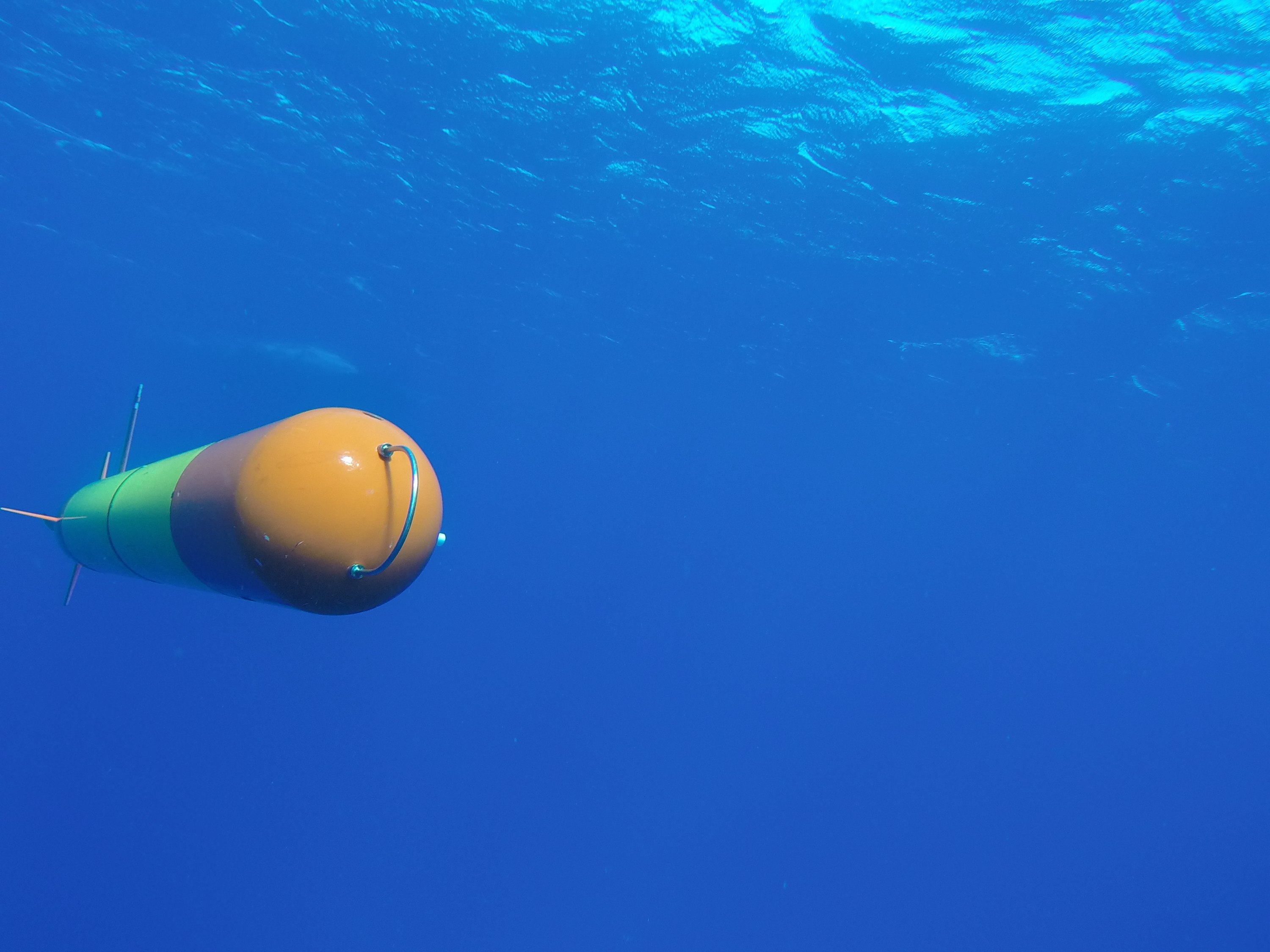
During this first leg of our cruise on the Falkor, we have been exploring novel and cutting edge ways to find and sample microbes in the ocean. One of our final tests was to send Aku on a mission to track the eddy DCM continuously for several days collecting seawater every 3 hours. Aku has now surfaced and the mission appears to have been a success! As the first leg of our Falkor expedition winds down, we will recover Aku (and Opah, which has also been running survey missions) from the ocean, open up the ESP, and extract the filters from the cartridges. These samples are the very first samples of their kind. Never before in microbial oceanography have we been able to sample the the open ocean DCM with this level of precision. We do not know what information these novel samples hold just yet, but everyone is excited and relieved that testing has been successful. We will return to the University of Hawai‘i Marine Center in a few days to swap out some of the SCOPE and MBARI team members before heading back out to sea for more great research onboard the Falkor.