



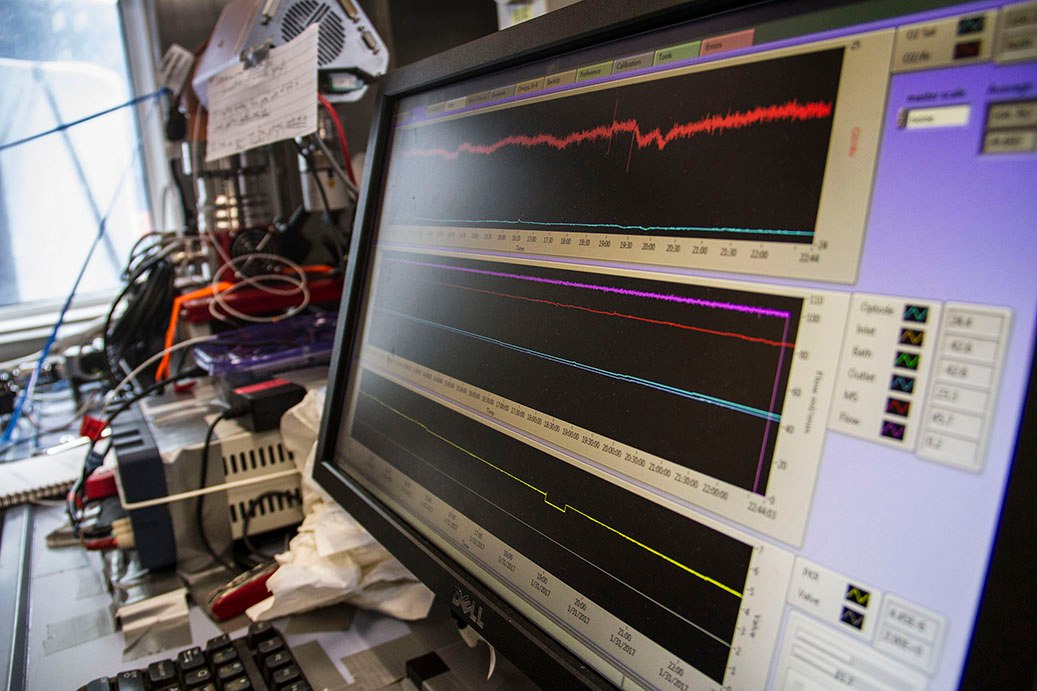

When people think of science, the first examples that come to mind are often dramatic triumphs—the moon landing, the invention of DNA sequencing, or the discovery of the polio vaccine. Almost every exciting experimental result, however, is the result of an enormous amount of unseen effort. Thorough preparation, resourceful improvisation, success, failure, and improvement through trial and error are all deeply familiar to any researcher!
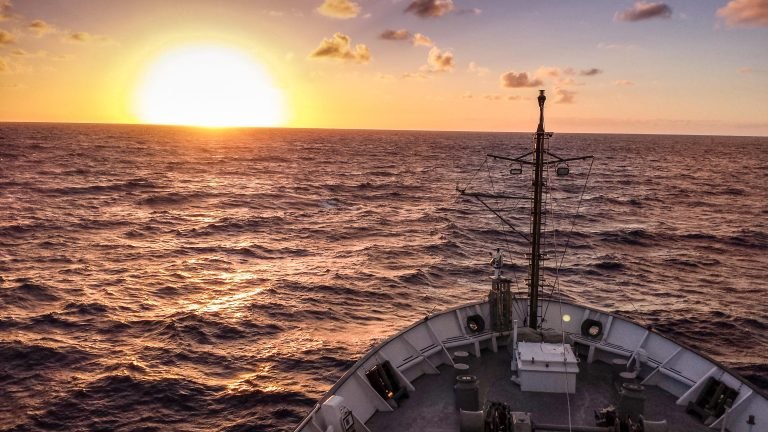
Seaver Wang, on board Falkor to study the role of phytoplankton in the Nitrogen Cycle, was quick to discover that at sea, the challenges that experts face as a part of ocean science are unique.[/caption]
The First Days
At sea on the Falkor, the challenges that we face as a part of ocean science are unique. After all, any unanticipated problems must be solved using only the resources on our 271 foot vessel.
My Enemy
For my research, which involves measuring dissolved gases from seawater to detect plankton activity, plumbing has been my biggest enemy so far.
The seawater I am measuring is piped continuously aboard ship via a pump, and this water is available from only two outlets in the already-crowded lab. My original plan to use seawater from one of the two faucets was scuppered when a crucial valve broke, spraying the lab with ocean water like a fire hose! After shutting the faucet and confirming that none of our sensitive electronic instruments had been damaged, we realized that I would now have to take my water from the second outlet—located on the opposite side of the room from where I had set up my seawater supply tubing…! In addition to reorganizing all of my plumbing, I would also have to find materials to connect to the second faucet, which uses a different connection from the first.
Luckily, scientists can be pretty inventive. My seawater supply pipe was moved to hang from the ceiling in order to cross the room, and I borrowed parts from other members of the science team in order to fit my tubing to the new faucet. Sharing the lab space is also an important part of ocean science, and so Ryan