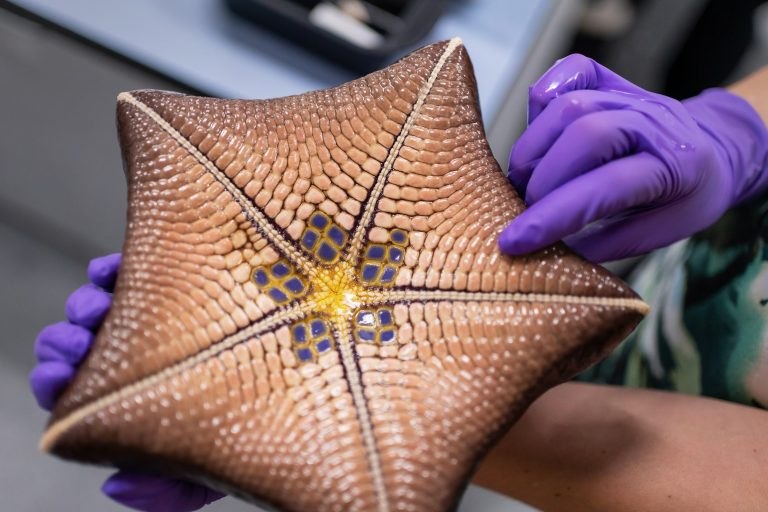

My name is Chloe, and I am an honours student at the University of Western Australia and a research associate at the Western Australian Museum. I am completing a marine science-focused honours degree, specifically looking at the phylogenetics of Pterasteridae
As part of my project, I will be analysing the DNA of many species within Pterasteridae and generating the first robust phylogeny
Once we have finished collecting samples for the day, the ROV surfaces. We then fill buckets with seawater, collect the specimens and bring them back to the lab to be photographed, subsampled, and preserved. My primary role in the laboratory is to keep track of the specimens (and sometimes the team). I am in charge of:
This process allows the specimens and their corresponding tissue samples to be easily searched for in the WA museum database and located within their massive collection. Once added to the database, the specimens we are collecting on this trip can be loaned by scientists working on various projects for years to come.
My honours project is invertebrate taxonomy focussed, so Nerida and Corey Whisson
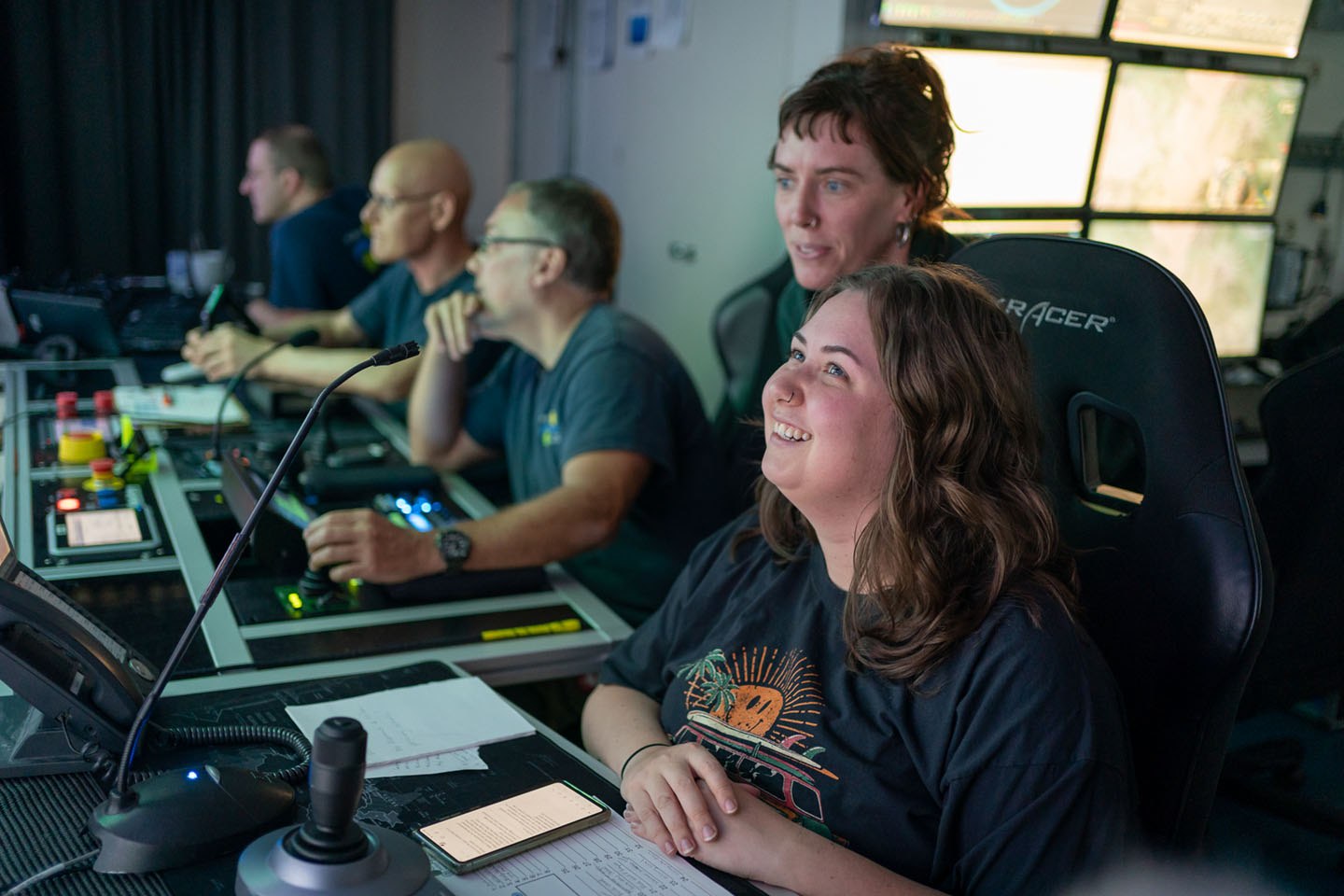
Having women like Nerida Wilson and Karen Miller, our chief scientist, leading this cruise has been such a valuable experience for me. This cruise has allowed me to learn about countless species that we have come across with ROV SuBastian that I never knew existed from experts, Karen being an expert on coral reefs and Nerida on marine invertebrates. As a woman in science myself, I know first-hand that science is still a predominantly male-dominated field, and so having two women to watch and learn from has been both exciting and encouraging. Nerida and Karen have quickly become role models to me, and having the chance to learn from them and work alongside them makes me feel confident in my choice to pursue a career in marine science.
Before this trip, my passions were sharks and the deep sea. To my surprise, early into this trip we came close to both, taking the ROV down to almost 200 metres and encountering a couple of white tip sharks. This opportunity has convinced me that I am on the right path towards an exciting and rewarding career. I cannot be more thankful to the Schmidt Ocean Institute, the University of Western Australia, the Western Australian Museum, and particularly Nerida for this incredible opportunity. I cannot wait to see what the rest of the trip has in store for us.
- Tracking which specimens in the lab have been processed and still need to be processed
- Assigning specimens a WAM ID number and creating labels for their lab photos
- Collecting, labelling, and storing 96% ethanol cryotubes that hold the extracted subsample tissue.