



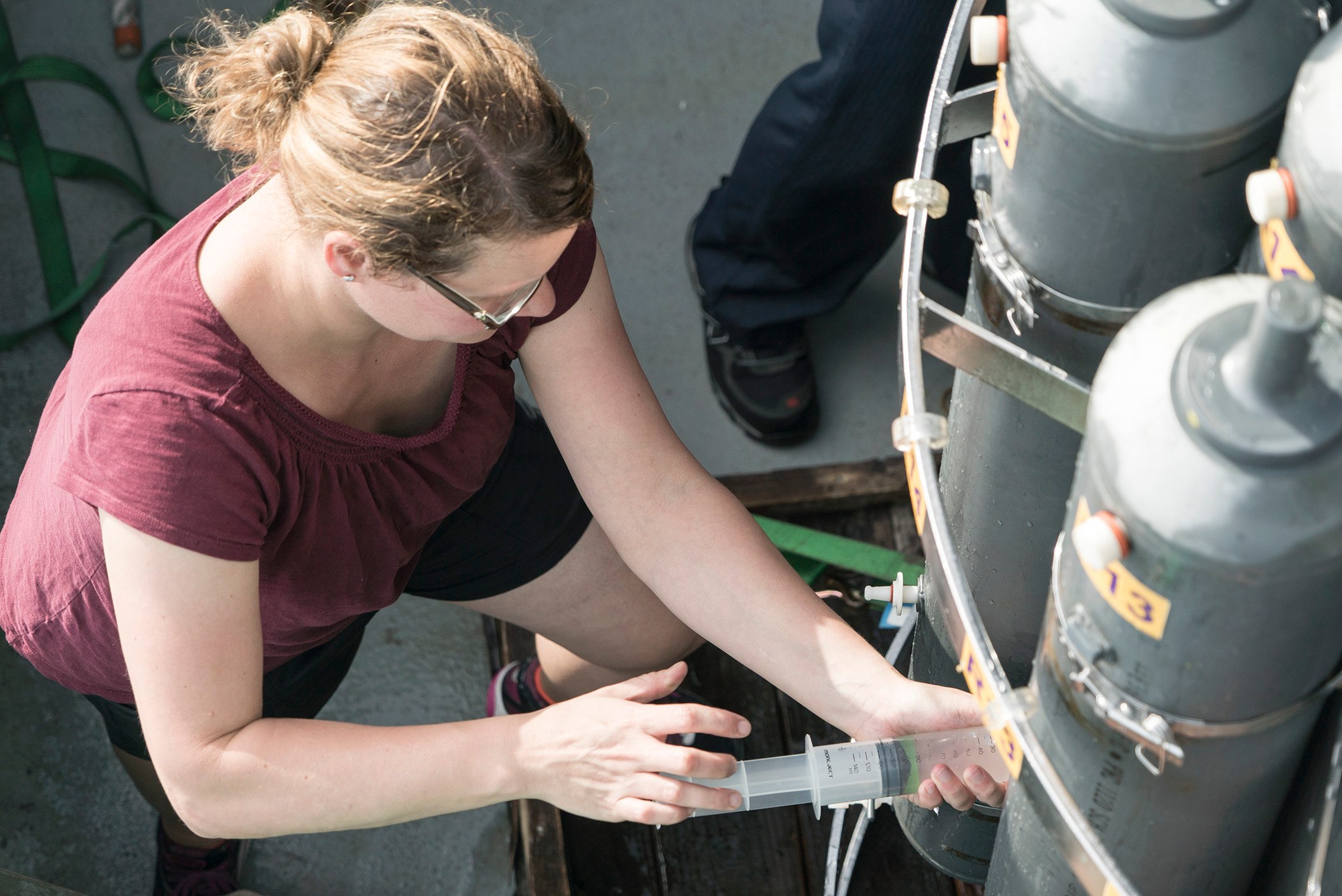

As the old saying goes, "Where there is smoke, there is fire." This is the approach researchers on R/V Falkor are using: searching for particles and chemical signals as tracers of plumes. The chemistry of seawater around volcanoes is different from that of the rest of the ocean. When the team runs into these differences over a volcano, they are most likely from a hydrothermal source.
This year the team is returning to a site they have researched before, trying to determine how it has changed over time. As the second week of the Underwater Fire expedition approaches its end, several interesting observations have already been made.
Change, Indeed
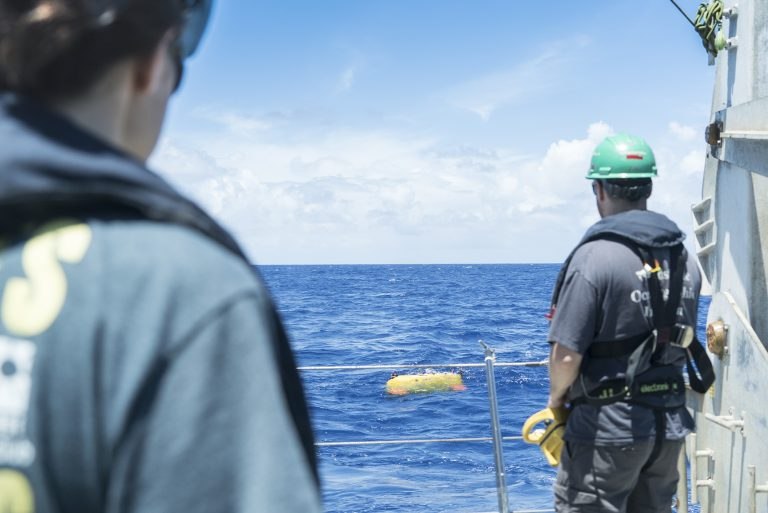
One of the aspects that Oceanographer Sharon Walker can tell from the CTD tow and the MAPR data
Bottled Water
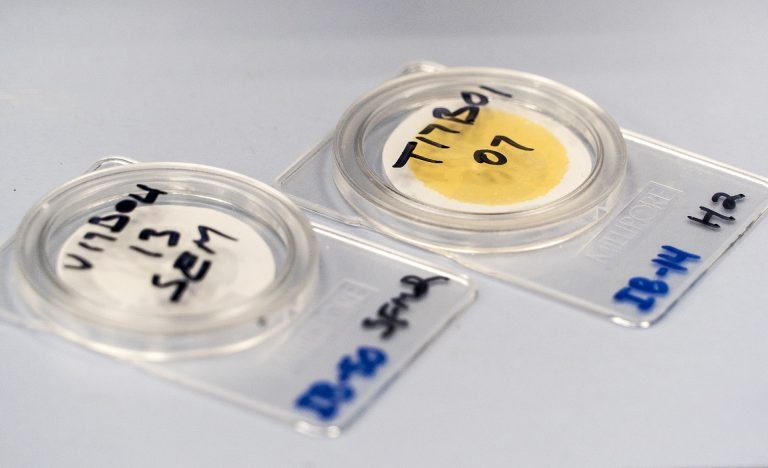
The team is also filtering water collected by the CTD casts, because analyzing the chemistry and the shape of the particles enables them to determine where they came from and how old the chemical reactions are. The longer the tiny mineral particles are subjected to acids in hydrothermal systems (such as sulfuric acid), the more degraded they will be.
Some of the filters have turned yellow, which points to the presence of elemental sulfur - this tells the scientists that there is a lot of magmatic gas coming out in the hydrothermal fluids.
One Big Story
One element researchers were hoping to see more of is abundant hydrogen. The lack of traces of this gas suggests West Mata is not undergoing explosive eruptions now, as it was in 2009. The findings, however, are still exciting. “This year we have found no hydrogen - when compared to the previous years - but there is methane, which we haven’t found before. This makes us wonder if the system is evolving from an active explosive eruption to something less powerful that could allow bacteria to settle on the lava and produce some methane. The other option is the presence of a hydrothermal vent field, formed over the past 5 years,” shares Dr. Tamara Baumberger, Marine Geochemist.
Dr. Joseph Resing, Marine Geochemist, seems more inclined to that second possibility: “We are kind of scratching our heads thinking, 'Why is there so much methane, what is the cause?' The fact that all of the other Matas have methane suggests to me that it comes from reactions between the water and the rock. I am thinking that the methane is not being produced by microbes, so it does not come from sediments. If that is the case, it has some broader implications that I still have to think about.”
What is Next
As Falkor moves away from West Mata to study the North Matas, it is clear that some interesting stories will develop in the coming days. The more the team studies the area, the more interesting it seems to become. “The nice thing about being at sea are the interpretations and understandings that are formed here. People ask 'Why can’t you do it from your desk?' but here I can talk to all of the other experts and gain insights that you would not gain by teleconference,” reflects Dr. Resing.
Sharon Walker, for instance, has observed: “I think that because we are seeing this big difference in bathymetric mapping since 2016, and because we see relatively strong plumes in the water column above the volcano - and we are detecting deep particle plumes - I think it is very likely that if West Mata is not currently actively erupting in some fashion, that it has very recently been doing so.”
The results so far from this first leg of the research cruise and the combined years of experience of the scientists will help them determine ROV SuBastian