



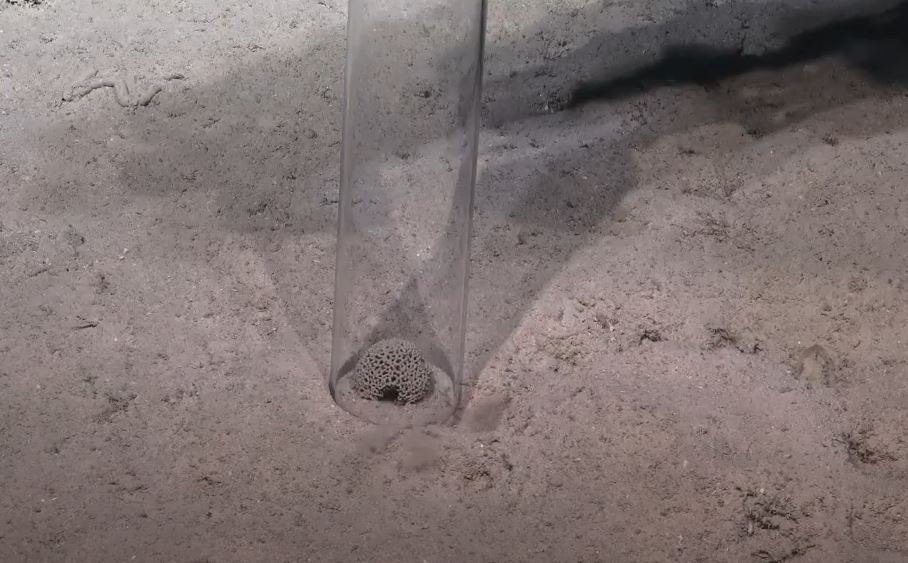

The deep sea is undoubtedly home to the weird and wonderful, but one of the strangest organisms of all is actually a single cell.
During my first deep-sea expedition over ten years ago, we noticed lumpy masses scattered all over an otherwise barren seafloor. At first we thought these were sponges, but I later learned these were xenophyophores, a common but poorly understood creature of the deep. They are often the dominant large life form in abyssal plains, but we know remarkably little about them.
Illuminating Biodiversity of the Ningaloo Canyons
Recent molecular analysis has confirmed that Xenophyophores belong to the phylum Foraminifera, although they have previously been classified as sponges, rhizopods and even a completely new phylum. They live exclusively in the deep-sea and use their amoeba-like pseudopodia to build elaborate houses from the surrounding sediment and other materials (one species builds exclusively from glass sponge spicules
Most xenophyophores are epibenthic, living on the surface of the seafloor, but some may extend their cytoplasm beneath the sediment. Some researchers even think that the common trace fossil Paleodictyon
We are still not even sure exactly what xenophyophores eat! They are likely detritivores and produce slime to ingest microbes already in the sediment, but there is also some indication that they may farm their own bacterial colonies in the slime as well. Xenophyophores are one of my favourite examples of how mysterious the deep sea remains, even as we continue our explorations of it.