



Dive In
About the Expedition
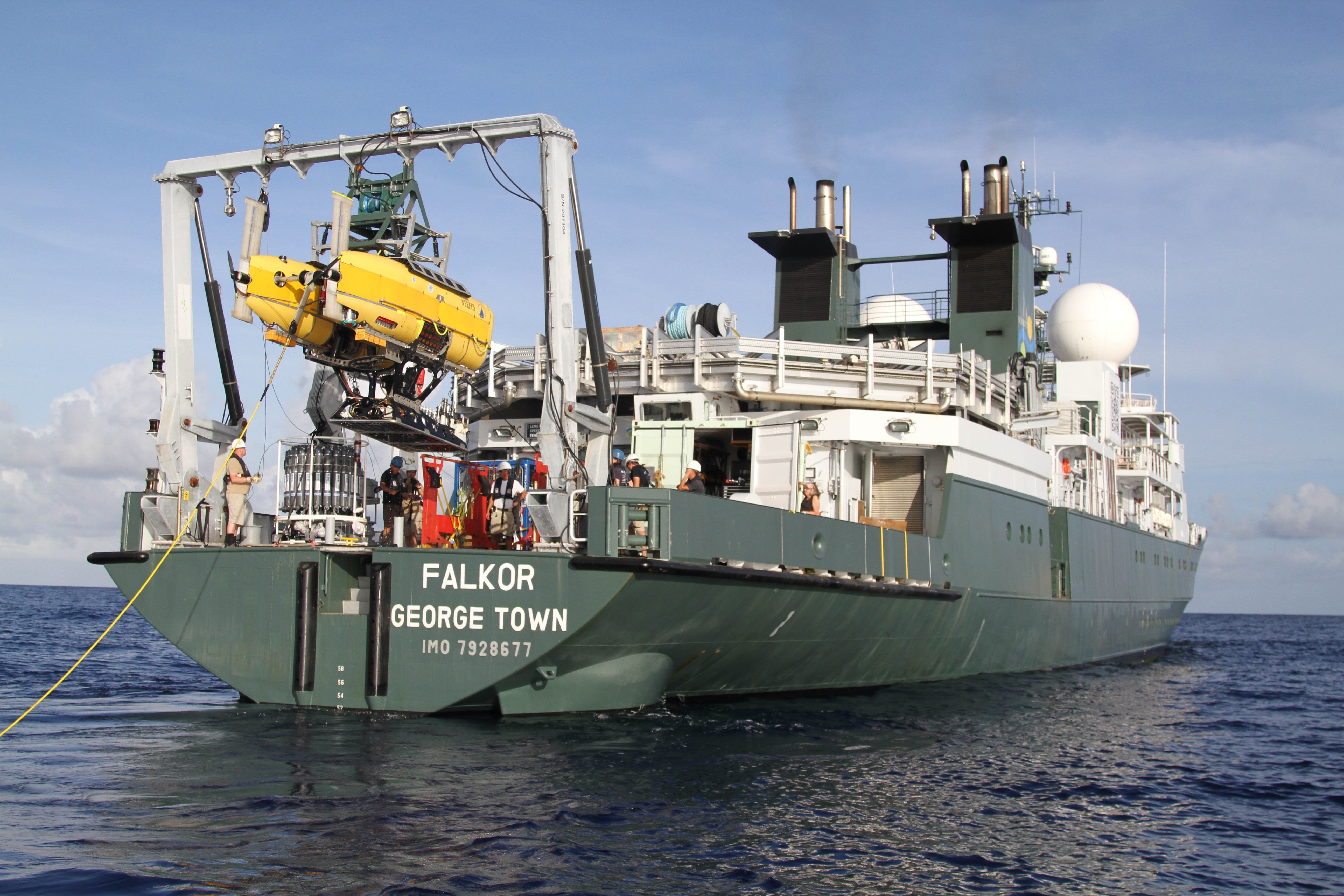
In June of 2013, R/V Falkor will be using the hybrid underwater robotic vehicle Nereus, to explore the depths of the Mid-Cayman Rise, which reaches more than 6,500 meters (~4 miles)
- Dive Markers
- Trackline
The Mission
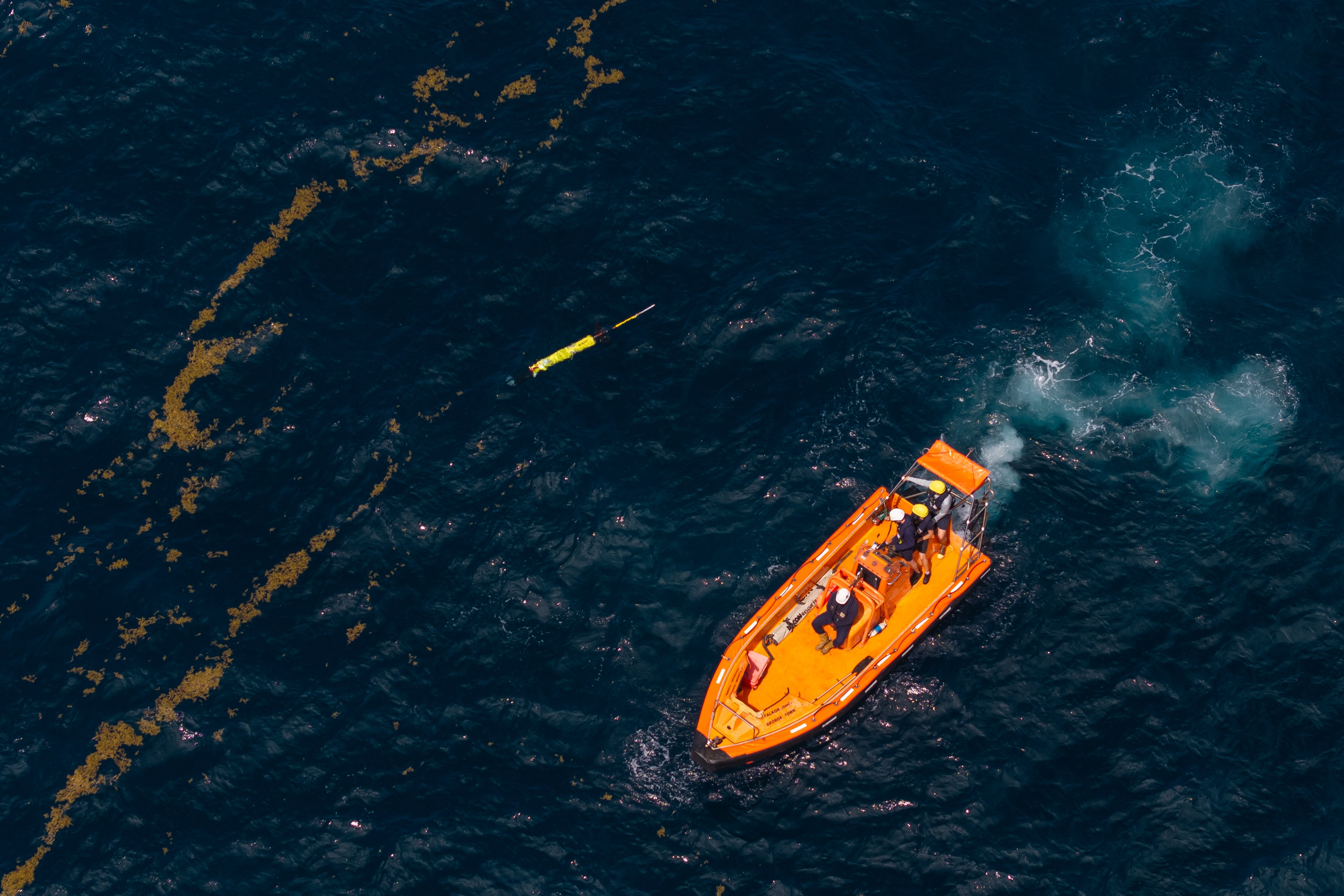
Throughout the month of June 2013, a team of oceanographers and astrobiologists continued their systematic exploration of one of the deepest points in the Caribbean Sea, searching for life in extreme seafloor environments. Using the hybrid underwater robotic vehicle Nereus, these scientists extended their investigations throughout the depths of the Mid-Cayman Rise, which reaches to more than 6,500 meters (~4 miles) deep.
The study area, also known as the Mid-Cayman Spreading Center, is one of Earth’s deepest and slowest-spreading mid-ocean ridges—regions where two of Earth’s tectonic plates are ripped apart and new material wells up from the Earth’s interior. There, our scientists searched for and sampled new hydrothermal vent systems—natural, seafloor plumbing systems where cold seawater circulates down into the hot, freshly-formed oceanic crust releasing heat and mineral-rich fluids at the seafloor that support complex ecosystems of exotic organisms. By exploring this extreme and previously uninvestigated section of the Earth’s deep seafloor, this research seeks to extend our understanding of the limits (in terms of extreme environments) to which life can exist on Earth, to understand how geologic processes might generate the prebiotic materials believed to have been an essential pre-cursor to life on Earth, and to help prepare for future efforts to explore for life on other planets.
R/V Falkor supported a broad variety of scientific operations during the two legs of this cruise, including CTD casts, multibeam mapping, operation of an add-on HROV Nereus in both AUV (during Leg 1) and ROV modes (during Leg 2) for high resolution vent site mapping, chemical and physical data collection at vent sites, interactive research at vent sites, observation and sampling of associated biological communities, and satellite teleoperations with shore-side scientists. Leg 1 left port in St. Petersburg, FL May 30 and concluded in George Town, Grand Cayman on June 16, 2013. After a personnel change and transition of Nereus into ROV-mode, Leg 2 left George Town June 19 and return to port June 30, 2013. During Leg 2, video from Nereus dives was viewable online during scheduled live events. The live event schedule was posted and updated here.
Visit the HROV Nereus Dive Video Archive
Team and Collaborators








Explore
Updates from the Ship
All Ship Updates
- 01
Getting Ready
15 February 2014
Read
- 02
From the Deep Sea to Europa
1 July 2013
Read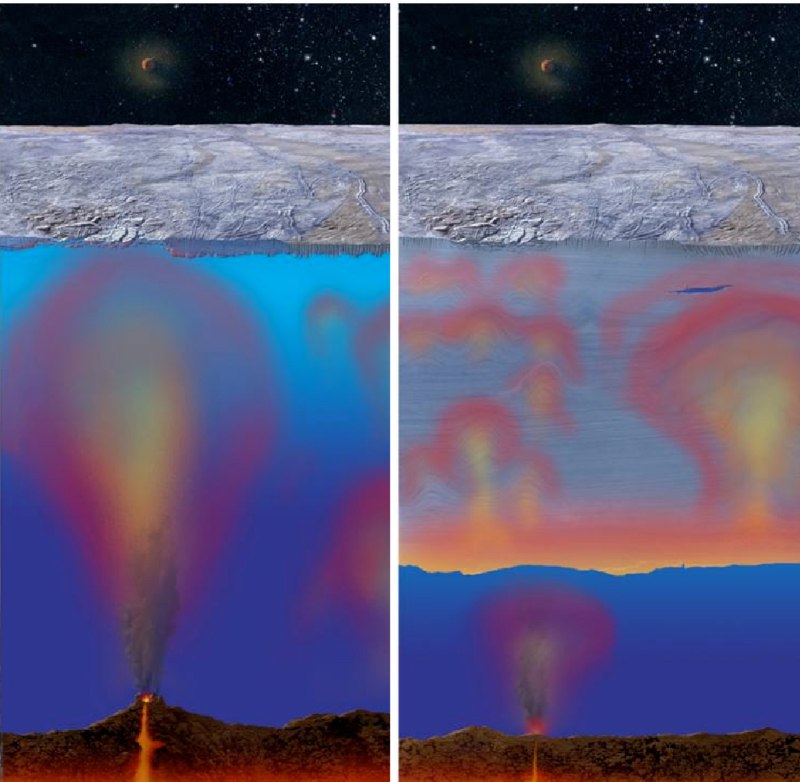
- 03
Homeward Bound
1 July 2013
Read - 04
Oases Video Archive (2013)
30 June 2013
Read - 05
Collapsing Under The Pressure
30 June 2013
Read
- 06
To Infinity and Beyond
29 June 2013
Read
- 07
Deep Sea Driving School
28 June 2013
Read
- 08
Mostly Armless
27 June 2013
Read
- 09
Redemption Song
26 June 2013
Read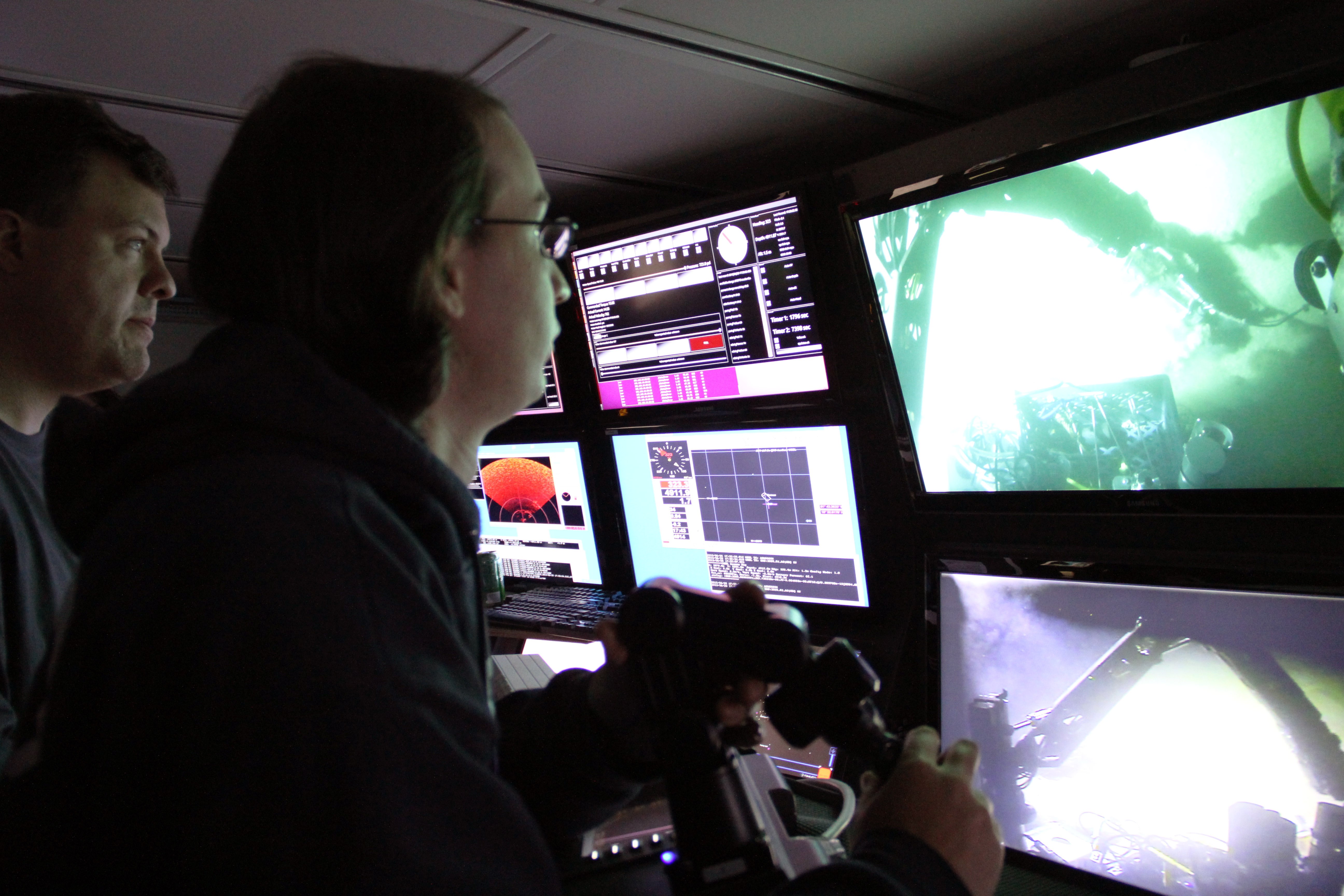
- 10
Transformers
25 June 2013
Read
- 11
A Triumph for Texan Engineering
25 June 2013
Read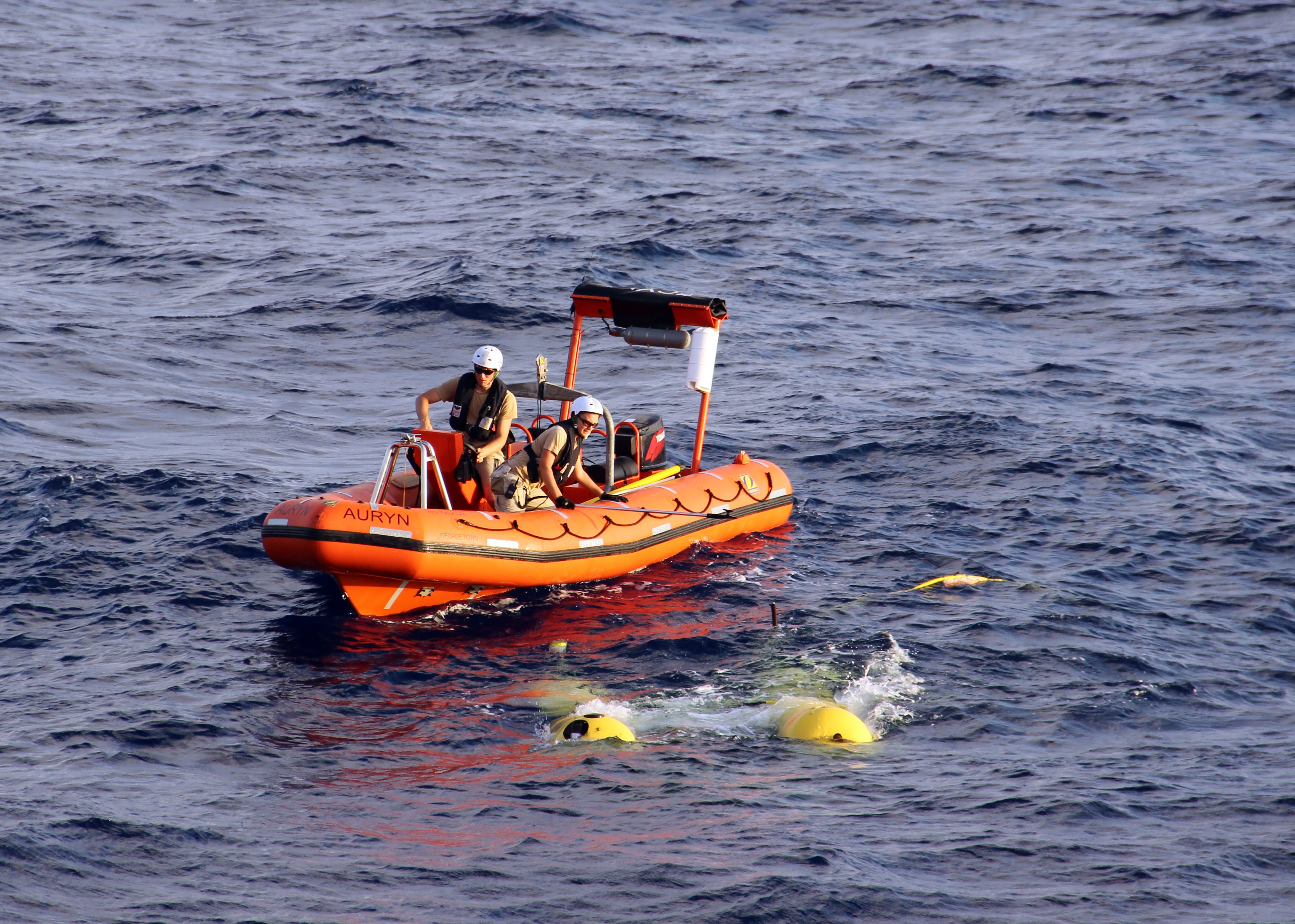
- 12
Perseverance
24 June 2013
Read
- 13
International Superstar
23 June 2013
Read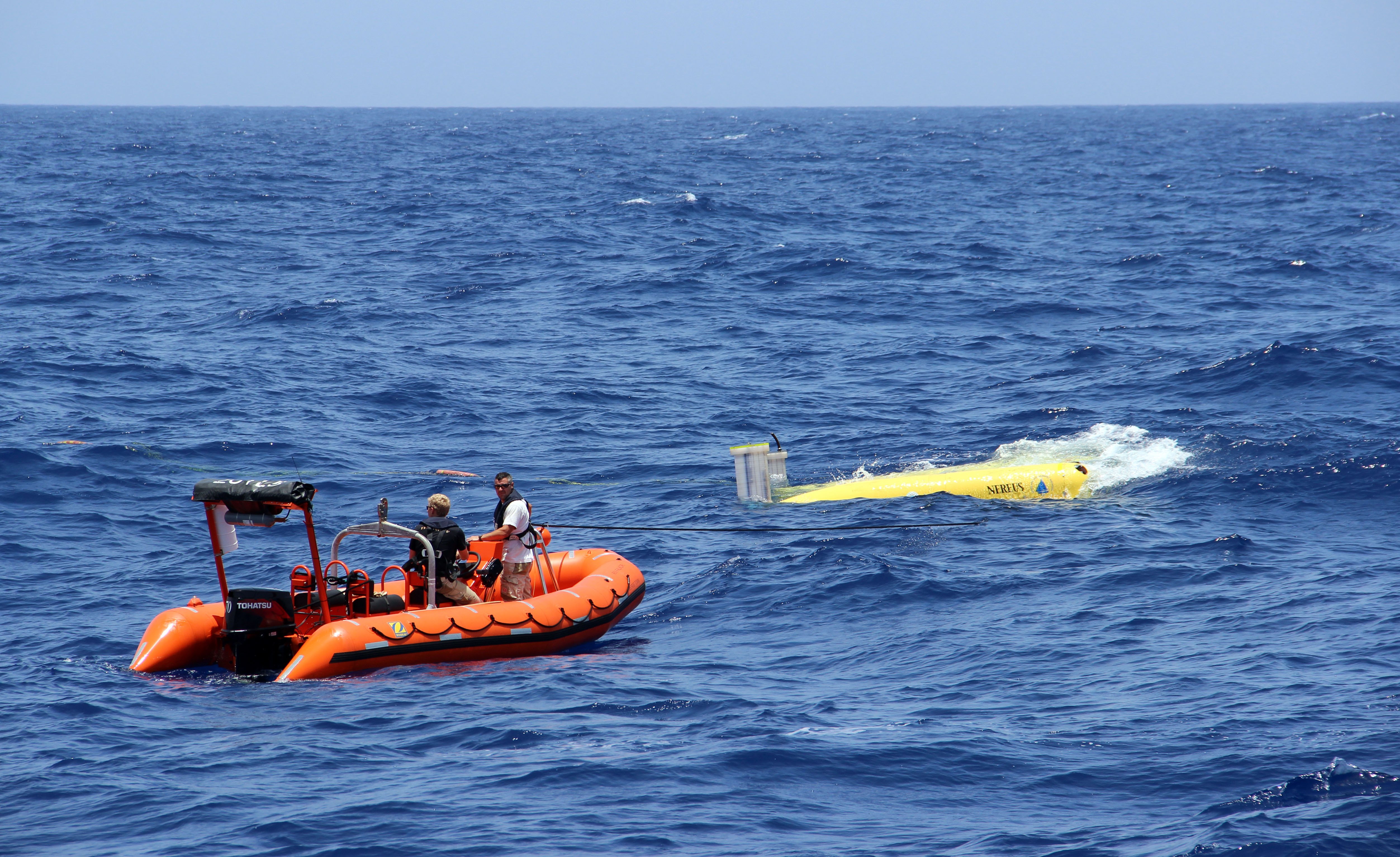
- 14
Character Building
22 June 2013
Read
- 15
Becalmed in Vent-Infested Waters
21 June 2013
Read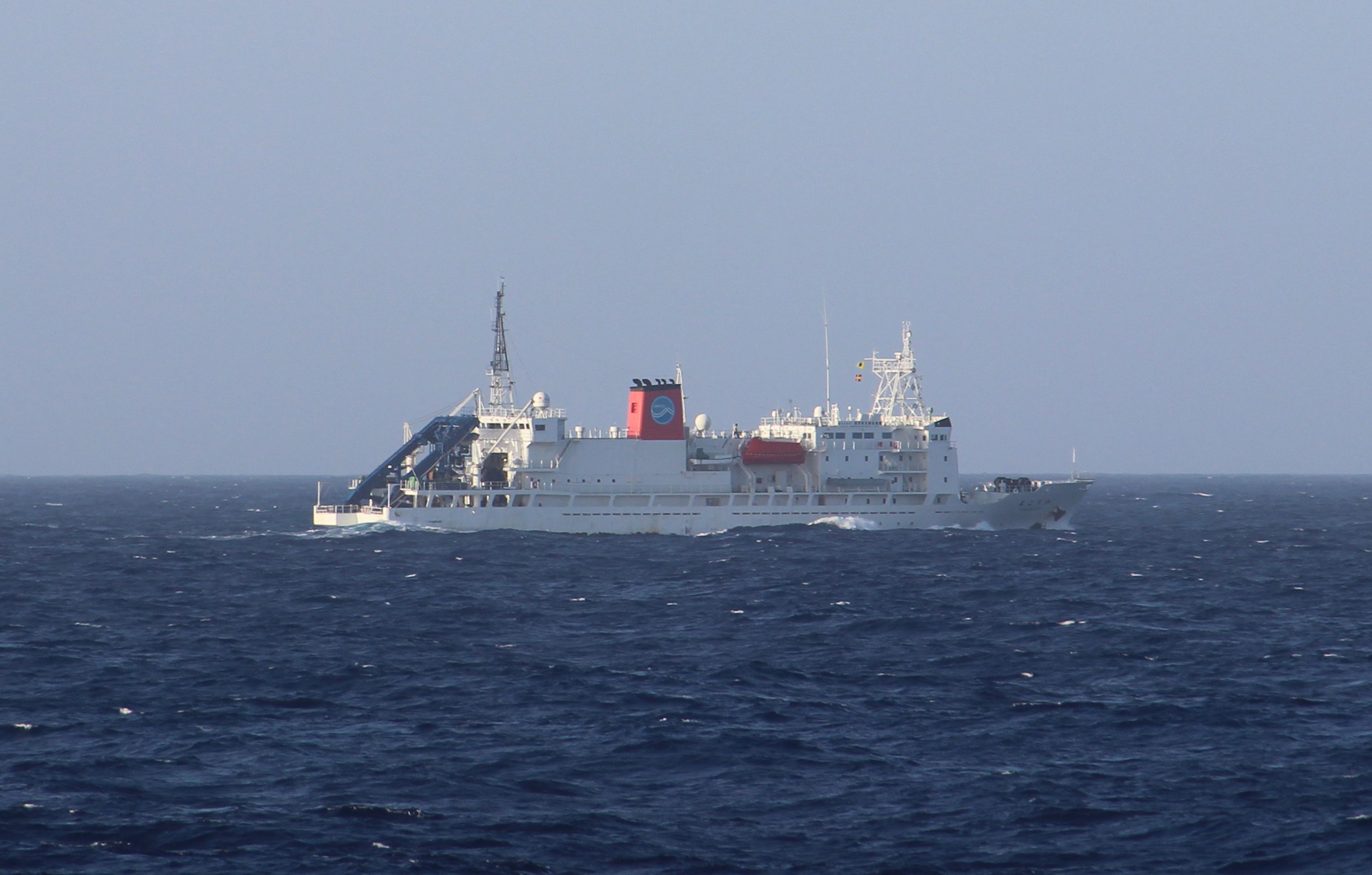
- 16
Scurvy Dogs and Sad Departures
19 June 2013
Read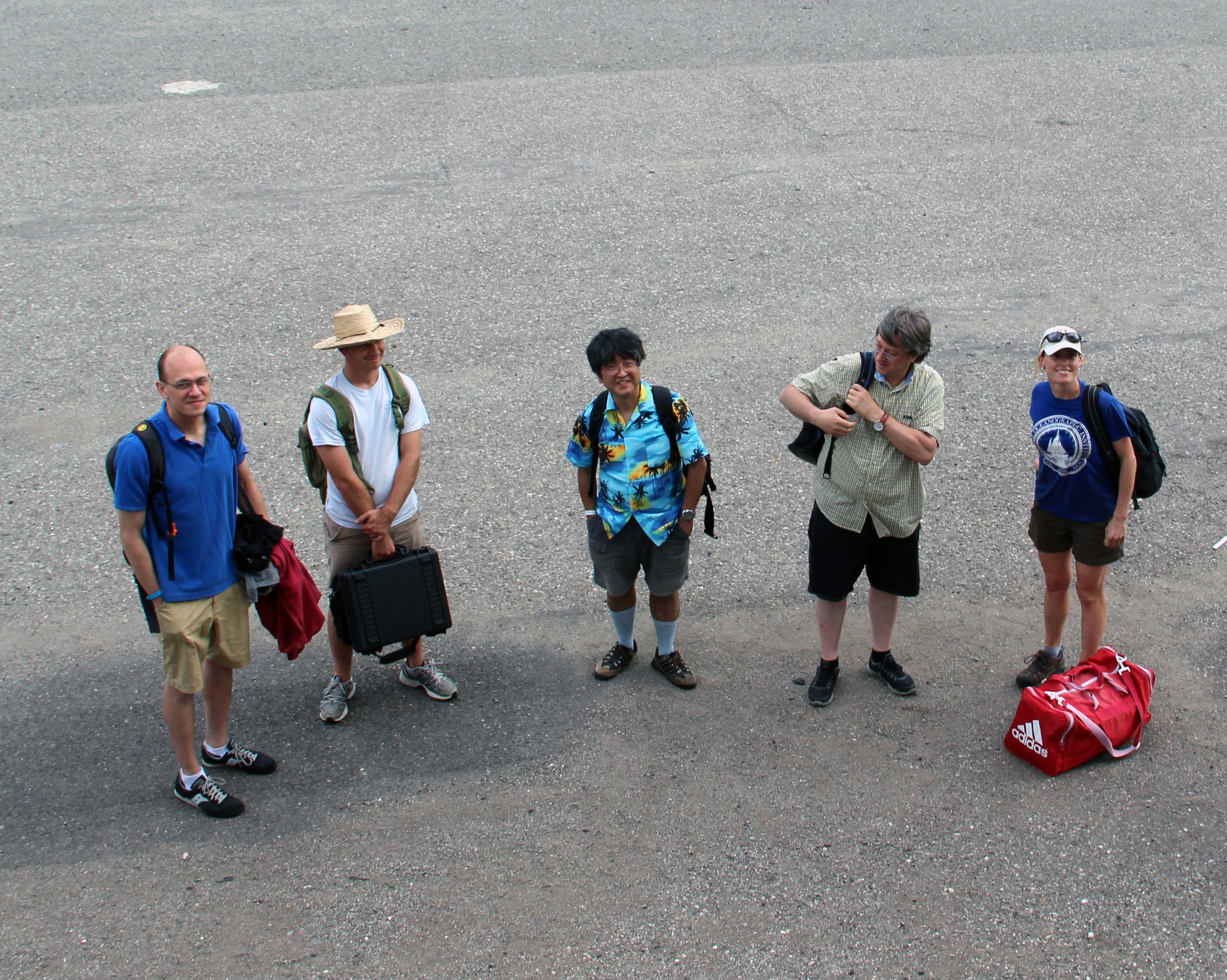
- 17
This is Our Art
18 June 2013
Read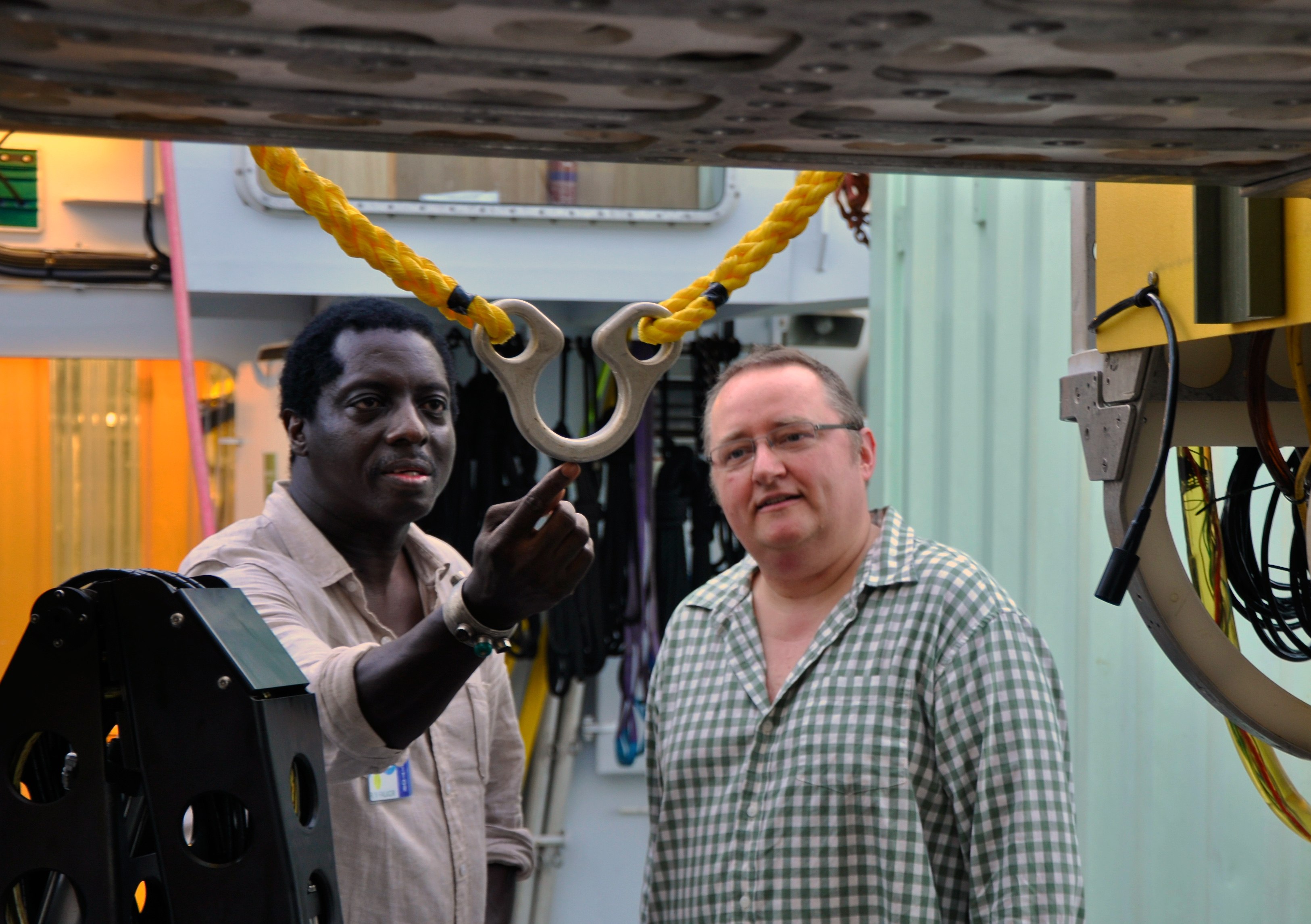
- 18
Father's Day (in some countries)
17 June 2013
Read
- 19
Go Big or Go Home
16 June 2013
Read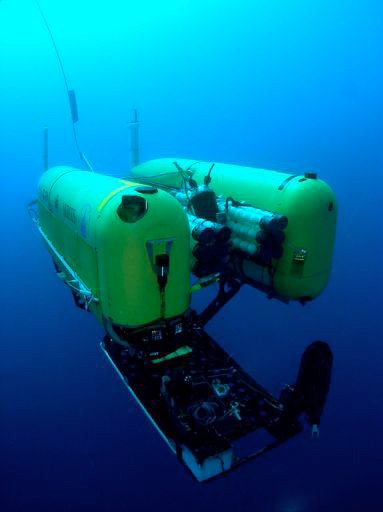
- 20
Nereus With Attitude
16 June 2013
Read
- 21
Refrigerator Art
15 June 2013
Read
- 22
Mind, He Doesn’t Get Out Much
13 June 2013
Read
- 23
Lars & the Real Gannet
12 June 2013
Read
- 24
Deep Joy
11 June 2013
Read
- 25
Sunday Race Day
10 June 2013
Read
- 26
A Big Blue Ball
8 June 2013
Read
- 27
Technical Difficulties
8 June 2013
Read
- 28
Winnie the Pooh and the Uncarved Block
6 June 2013
Read
- 29
Silent Running
5 June 2013
Read
- 30
Some days seem longer than others
4 June 2013
Read
- 31
Sometimes you eat the dive…
3 June 2013
Read
- 32
Virus Alert
2 June 2013
Read
- 33
Transit
1 June 2013
Read
- 34
First Salt!
31 May 2013
Read
- 35
Catch and Release…
30 May 2013
Read
- 36
No backing out now!
29 May 2013
Read
- 37
Memorial Day
28 May 2013
Read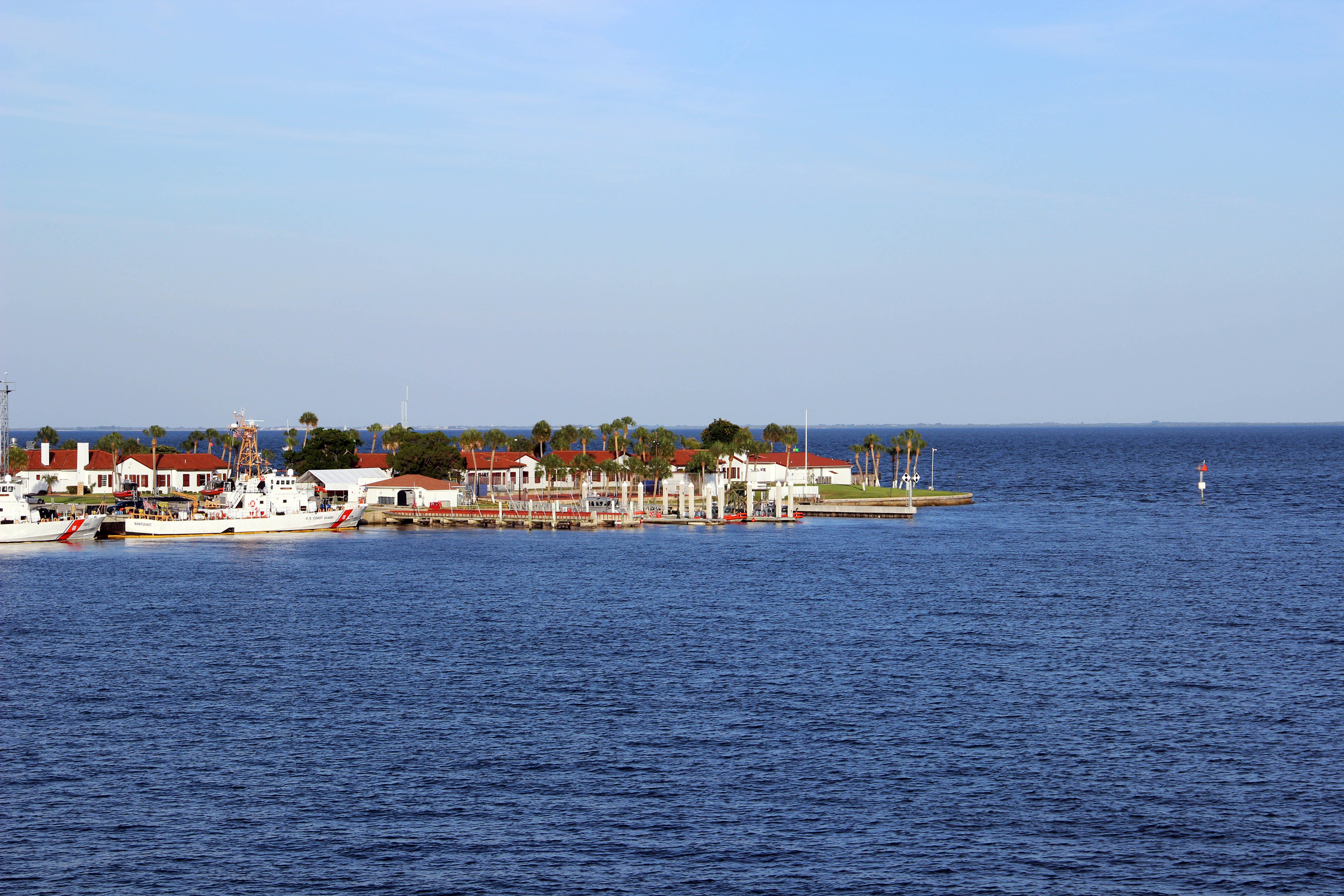
- 38
Mobilization
27 May 2013
Read
Divestreams
View all DivestreamsDiscover More
Expedition Data
Title  | Type | Repository |
|---|---|---|
| AUV Plume Sensor Maps and Data | Mapping Data | Other |
| AUV Maps of MCR Vent-Sites | Mapping Data | Other |
| ROV Nereus Dive, Video: Walsh, Europa | Captured Image/Video | Other |
| ROV Nereus Dives | Captured Image/Video | YouTube |
| Hydrothermal fluid samples | Water Samples | Other |
| Mineral/Rock samples | Rock Samples | Other |
| Hydrothermal microbial samples list | Biological Samples | Other |
| Biological samples | Biological Samples | Other |
| Hydrothermal plume samples list | Sediment Samples | Other |
| Multibeam Bathymetry | Sonar Data | National Centers for Environmental Information (NCEI) |
| Metagenomic reads of the subseafloor microbes at Mid-Cayman Rise | Genetic Analysis Data | European Nucleotide Archive |
| Processed Swath Bathymetry | Sonar Data | Marine Geoscience Data System (MGDS) |
Publications from This Expedition
German, C.R., et al. (2014). Cruise Report: Hydrothermal Exploration of the Mid-Cayman Rise FK-008 (OASES 2013), 51pp + 6 Appendices.
Estapa, M.L., J.A. Breier & C.R. German (2015). Particle dynamics in the rising plume at Piccard Hydrothermal Field, Mid-Cayman Rise. Geochemistry, Geophysics, Geosystems, 16, 2762 - 2774. DOI: 10.1002/2015GC005831.
German, C.R. (2014). Hydrothermal exploration in distant oceans: Oases for life on Earth and Beyond.” Invited paper at Biosignatures Meeting (Nordic Institute for Astrobiology), Bergen, Norway. May 2014.
Huber, J.A. (2014). Subseafloor microbial life in venting fluids from the Mid Cayman Rise hydrothermal system. Deep Carbon Observatory Deep Life Meeting. Portland, OR.
McDermott, J.M. (2014). Geochemistry of Deep-Sea Hydrothermal Vent Fluids from the Mid-Cayman Rise, Caribbean Sea. WHOI-MIT Joint Program.
McDermott, J.M., J.S Seewald, C.R. German & S.P. Sylva. (2014). Constraints on hydrocarbon and organic acid abundances in hydrothermal fluids at the Von Damm vent field, Mid-Cayman Rise. American Geophysical Union Fall Meeting, San Francisco, CA, USA.
Versteegh, E.A.A., C.L.Van Dover & M.Coleman (2014). Unsuspected dietary habits of hydrothermal vent shrimp: bacterivorous Rimicaris hybisae can be carnivorous or even cannibalistic. EGU General Assembly: Geophysical Research Abstracts 16, EGU2014-2408.
Looking for Life in Oceans on Earth & in Space. Guest Speaker Series, Aquarium of the Pacific October 2nd, 2014. Podcast video available.
Anderson, R., Reveillaud, J., Eren, A.M., McDermott, J., Seewald, J., Stepanauskas, R., and J.A. Huber. (2016). Strain-level variation of subseafloor microbial populations from venting fluids at the Mid-Cayman Rise. Oral Presentation, International Society for Microbial Ecology General Meeting, Montreal, CAN.
Huber, J.A. (2015). Microbial Life Beneath the Seafloor. Oral Presentation, American Society for Microbiology General Meeting, New Orleans, LA, USA.
Huber, J.A. (2015). How Geochemical Landscapes Shape Subseafloor Microbial Communities at Deep-sea Hydrothermal Vents. Oral Presentation, Gordon Research Conference on Chemical Oceanography, Holdren, NH, USA.
Anderson, R., Reveillaud, J., Reddington, E., Delmont, T., Eren, A., McDermott, J., Seewald, J., and Huber, J. (2017). Genomic Variation in Microbial Populations Inhabiting the Marine Subseafloor at Deep-sea Hydrothermal Vents. Nature Communications 8, 1114 (2017), doi: 10.1038/s41467-017-01228-6.
[This Article was published OPEN ACCESS]McDermott, J., Sylva, S., Ono, S., German, C., and Seewald, J. (2018). Geochemistry of Fluids from Earth's Deepest Ridge-crest Hot-springs: Piccard Hydrothermal Vent Field, Mid-Cayman Rise. Geochimica et Cosmochimica Acta, 228, 95-118, doi: 10.1016/j.gca.2018.02.021.
Galambos, D., Anderson, R., Reveillaud, J., and Huber, J. (2019). Genome-resolved metagenomics and metatranscriptomics reveal niche differentiation in functionally redundant microbial communities at deep-sea hydrothermal vents. Env. Microbiology, doi: 10.1111/1462-2920.14806.
[This Article was published OPEN ACCESS]McDermott, J., Sylva, S., Ono, S., German, C. and Seewald, J. (2020). Abiotic redox reactions in hydrothermal mixing zones: Decreased energy availability for the subsurface biosphere. PNAS, 117(34) 20453-20461, doi: 10.1073/pnas.2003108117.
[This Article was published OPEN ACCESS]Moulana, A., Anderson, R., Fortunato, C., and Huber, J. (2020). Selection is a Significant Driver of a Gene Gain and Loss in the Pangenome of the Bacterial Genus Sulfurovum in Geographically Distinct Deep-sea Hydrothermal Vents. mSystems, 5(2) e00673-19; doi: 10.1128/mSystems.00673-19.
[This Article was published OPEN ACCESS]Thomas, E., Anderson, R., Li, V., Rogan, J., and Huber, J. (2020). Diverse viruses have restricted biogeography in deep-sea hydrothermal vent fluids. bioRxiv, doi: 10.1101/2020.06.04.125666. [This article is published has OPEN ACCESS, is a pre-print, and has not been certified by peer review].
[This Article was published OPEN ACCESS]Reveillaud, J., Reddington, E., McDermott, J., Algar, C., Meyer, J., Sylva, S., et. al. (2016). Subseafloor microbial communities in hydrogen-rich vent fluids from hydrothermal systems along the Mid-Cayman Rise. Env. Microbiology, 18(6), doi: 10.1111/1462-2920.13173.
[This Article was published OPEN ACCESS]Hoffert, M., Anderson, R., Reveillaud, J., Murphy, L, Stepanauskas, R., and Huber, J. (2021). Genomic Variation Influences Methanothermococcus Fitness in Marine Hydrothermal Vents. Front. Microbiol. 12:71490, doi: 10.3389/fmicb.2021.714920.
[This Article was published OPEN ACCESS]Thomas, E., Anderson, R., Li, V., Rogan, L., and Huber, J. (2021). Diverse Viruses in Deep-sea Hydrothermal Vent Fluids Have Restricted Dispersal across Ocean Basins. Geomicrobiology 6(3), doi: 10.1128/mSystems.00068-21.
[This Article was published OPEN ACCESS]