



Dive In
About the Expedition
The Malvinas Current offshore of Argentina — a branch of the Antarctic Circumpolar Current — carries nutrients and cold water from the south, boosting primary productivity in the Southwest Atlantic Ocean. Underwater canyons along Argentina’s continental slope create irregularities in the seafloor that could change the path of this powerful current, facilitating an exchange of water masses between the shelf and the open Ocean. Scientists hypothesize that, as a consequence of this dynamic, massive phytoplankton blooms and biodiversity hotspots are present near the canyon heads in these waters.
Principal investigator Dr. Silvia Romero, from Argentina’s Servicio de Hidrografía Naval, Universidad de la Defensa Nacional, and Universidad de Buenos Aires, along with a team from multiple Argentinian institutions, will map and study two underwater canyons. They will compare and contrast how the different shapes of the canyons alter the movement of water masses within the Malvinas Current using multiple technologies and the state-of-the-art resources available on R/V Falkor (too). The team will study how the current interacts with each canyon’s individual topography to improve their understanding of these dynamic environments.
- Dive Markers
- Trackline
The Mission
Understanding currents, canyons, and productivity
All living organisms require fuel for survival. In the Ocean, the base of the food web is primary producers known as phytoplankton, tiny aquatic plants suspended in the water. Primary productivity, simply put, is the creation of organic material from inorganic compounds. At the ocean surface, this productivity is driven by the sun through photosynthesis.
The Malvinas Current extends from the Ocean’s surface to the seafloor and is made up of multiple different water masses. When cold, nutrient-rich waters from the Antarctic Circumpolar Current reach the waters offshore of Argentina, the different water masses mix, feeding massive phytoplankton blooms. This mixing happens year-round but is most pronounced in austral spring. Some blooms are so large they span hundreds of square kilometers, making them visible from space. The primary production from these blooms supports invertebrates, fish, marine mammals, seabirds, and myriad other species; these nutrient-rich waters also sustain a globally important and lucrative fishing industry. Phytoplankton also play a crucial role in capturing CO2 and producing oxygen.
The science team suspects that underwater canyons dramatically influence the Malvinas Current along the northern Bonaerense and southern Patagonian shelf-break, the boundary where the continental shelf — a gently sloping, submerged portion of a continent — abruptly ends and descends into a steeper slope that connects to the seafloor. Argentina’s continental shelf is massive, with an abrupt transition into the slope where the depth changes from about 200 to 4000 meters.
Instead of flowing swiftly northeast along the deeper slope, the current is deflected onto the shallower continental shelf, turning northwest. On the shelf, the current encounters slower-moving sub-Antarctic shelf waters, which are warmer, less salty, and contain fewer nutrients. Essentially, these canyons act as disruptive conduits, breaking down the natural barrier between the shelf and slope waters. This deviation leads to enhanced mixing and turbulent conditions over the shelf, crucially boosting plankton blooms.
Tools for telling the tale
Like most Schmidt Ocean Institute expeditions, the work begins with mapping. The canyons along the shelf-break are only partially mapped, and the relationship between their shape, water masses, sedimentary processes, and biodiversity is not fully understood. The science team will focus on two submarine canyons: one in the Bahía Blanca region and the other in the Almirante Brown region. Multibeam echo sounders, paired with a sub-bottom profiler, which relies on low-frequency acoustic signals, or sound waves, will provide researchers with high-resolution maps of the seafloor, sediment, and rock layers beneath the seafloor.
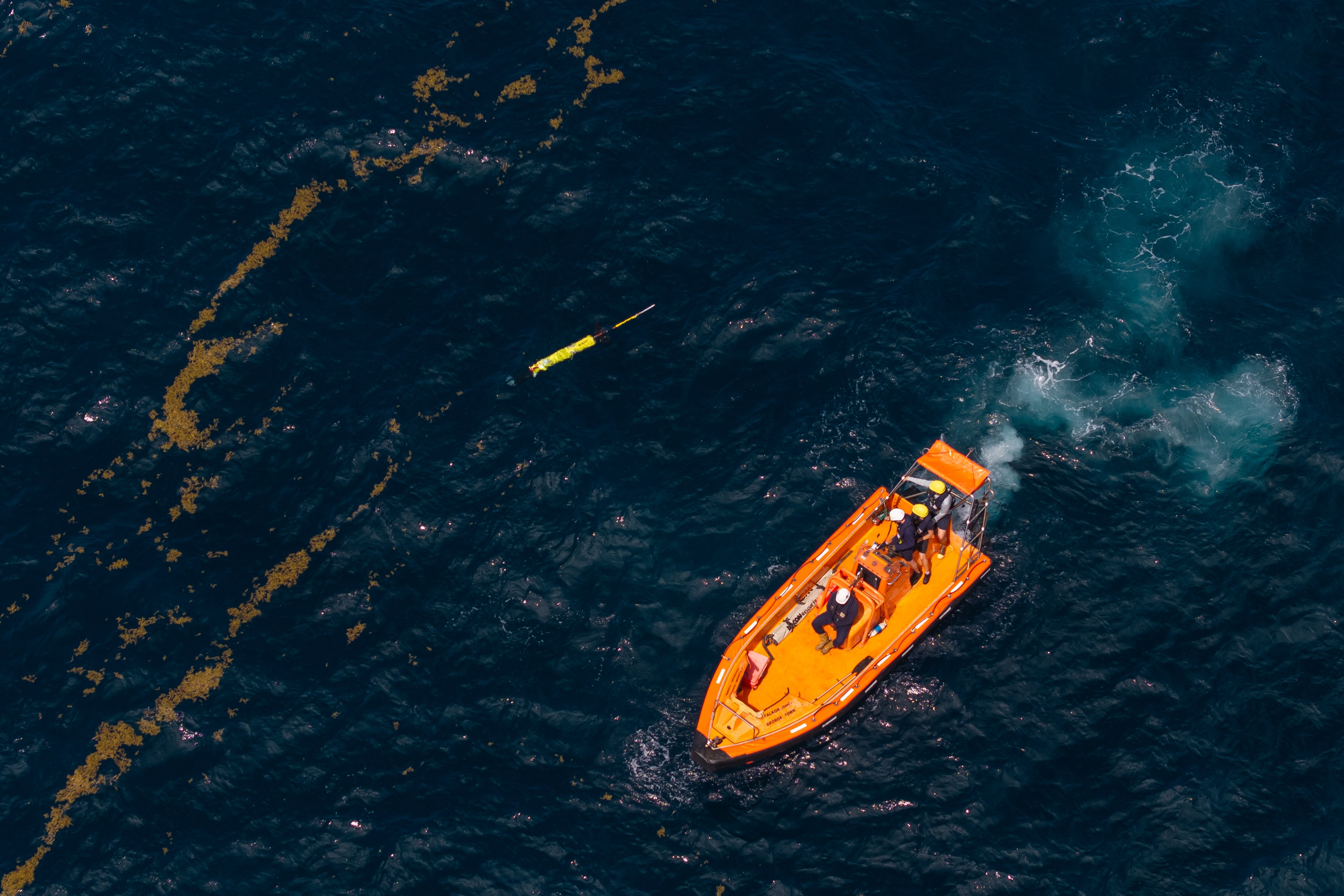
The ship’s CTD & rosette, outfitted with a Lowered Acoustic Doppler Profiler, or LADCP, will collect water samples and data on properties within the water column, including measurements of the speed and direction of the currents at each station. The researchers will also deploy a range of technologies, including surface drifters, an autonomous glider, landers, net tows, and a moored buoy. These instruments will collect data on current speeds, properties in the water column, meteorological influences, biomass, biodiversity, and more, to fully characterize the behavior of the Malvinas Current at the submarine canyon heads. A series of dives with ROV SuBastian will add imagery and samples to the dataset collected.
Artist-at-Sea
Visual artist Christine Laquet, from Nantes, France, will join the expedition as the Artist-at-Sea. Her work employs multiple types of productions to draw connections across different time periods, unraveling configurations of power and examining the phenomenon of fear. She investigates how we relate to our environment by focusing on nonhuman elements (such as animal figures, plants, or minerals) as well as invisible influences, employing a poetic process of reorganization to seek new perspectives across geological timescales.
Combined with a research-based approach and situated in the context of the Anthropocene, her work aims to bridge the gap between the viewer and the participant, as well as the farthest reaches of space and time. Through graphic, performative, and installation works, she seeks to challenge our gaze and change our points of view.
Christine has exhibited her work internationally in notable institutions such as the Contemporary Art Museum A. Magalhaes (BR), at the PyeongChang Biennale (KR), the Zamek Culture Center (PL), or the BUG gallery (TH) amongst others, in France and from New York to Bangkok, Innsbruck, Poznan, Sao Paolo, Seoul, and Aarhus.
Team and Collaborators

Silvia Romero
Chief Scientist
Ornella Silvestri

Valeria Ana Guinder

Sebastián E. Cornejo Guzmán

Ricardo Silva
Nagib Bhairy
Melina Scian
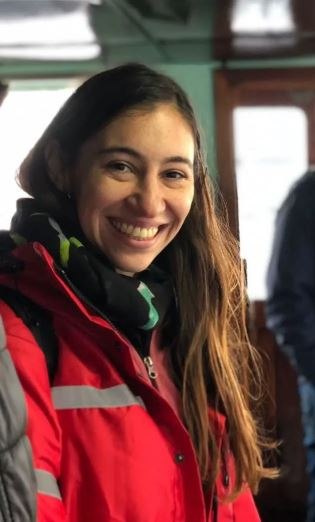
Melina M. Martinez
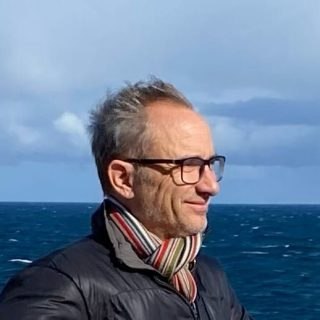
Martin Saraceno
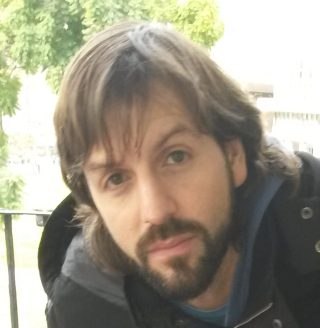
Martin Rivarossa
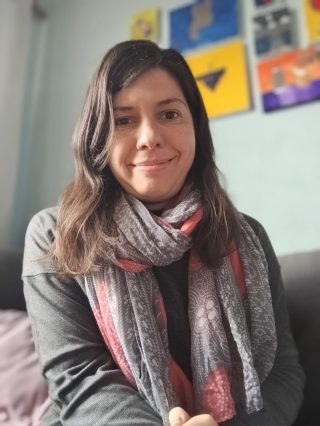
Lucia Carolina Kahl

Laura Ruiz Etcheverry
José Isola

Javier Chazarreta
Fermin Palma
Faustino Arribalzaga
Fabio Colman

Fabiana Capitanio
Eva Noli

Estefania Fernandez

Paola Dávila
Marcela Charo
Graziella Bozzano
Azul Gilabert
Celeste Antieco
Ana Paula Osiroff

Celeste López-Abbate

Bernarda Cornejo Pinto
Multimedia Correspondent
Christine Laquet
Artist-at-Sea









Explore
Related Galleries
View All
We are happy to offer a streamlined request process when usage falls within the parameters outlined in the Creative Commons Attribution-Noncommercial-ShareAlike 4.0 International (CC BY-NC-SA 4.0) License. However, due to our legal status as a 501(c)(3) private operating foundation, no media produced by Schmidt Ocean Institute may be used in attempting to influence legislation or lobbying.
Attribution-NonCommercial-ShareAlike | CC BY-NC-SA
Under this Creative Commons License, you are free to:
Share — copy and redistribute the material in any medium or format
Adapt — remix, transform, and build upon the material
Under the following terms:
Attribution. You must give appropriate credit, provide a link to the license, and indicate if changes were made. You may do so in any reasonable manner, but not in any way that suggests the licensor endorses you or your use.
NonCommercial. You may not use the material for commercial purposes.
ShareAlike. If you remix, transform, or build upon the material, you must distribute your contributions under the same license as the original.
Not sure this license fits your use? Head over to our Image Requests page to learn more
Divestreams
View all Divestreams

Discover More
Expedition Data
Title  | Type | Repository |
|---|---|---|
| ADCP | Sonar Data | University of Hawaii SOEST |
| ROV Event Data | Other | Marine Geoscience Data System (MGDS) |
| ROV Oceanographic Sensor Data | Sonar Data | Marine Geoscience Data System (MGDS) |
Publications from This Expedition
Preliminary Expedition Report: A Tale of Two Submarine Canyons (English)
[This Article was published OPEN ACCESS]Preliminary Expedition Report: A Tale of Two Submarine Canyons (Spanish)
[This Article was published OPEN ACCESS]